From Hitching Post to Bike Rack: Objects at the Street Edge
See how street furniture shapes shared sidewalk space, and learn to read what each object supports, where it belongs, and what changes when it is occupied.
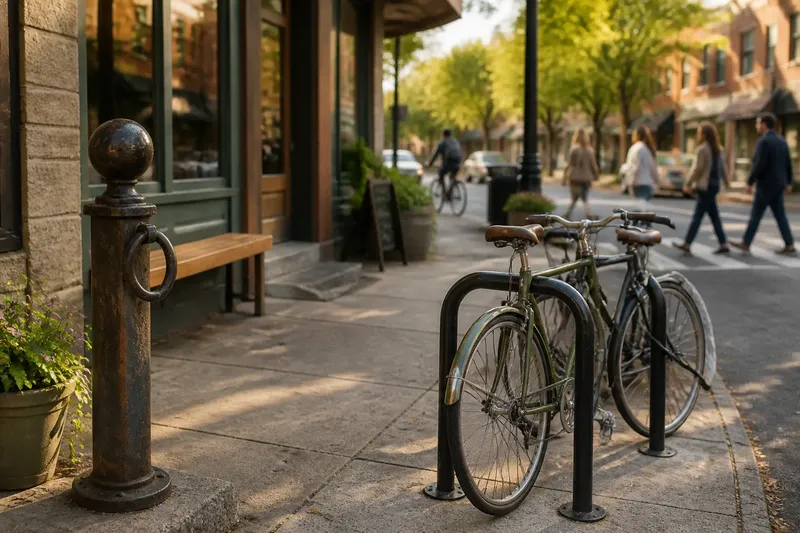
The common mistake with street furniture is to treat each object as an isolated convenience. A bike rack serves cyclists, a bench serves people who want to sit, and a post seems to serve nobody in particular. That view misses what these objects cost a street: space, attention, and choices about who may pause, park, tie something up, or pass through. The change from hitching post to bike rack is one way to read how expectations for the street edge have shifted.
Street furniture can be read as a record of transport habits made tangible, though any broad history is an interpretation rather than a single settled sequence. A hitching post addressed the practical needs of animal-drawn travel; a bike rack addresses bicycle parking within a street shared by many activities. Some objects have a narrow purpose, while others do several jobs at once. The useful question is what behavior an object makes possible and what it asks others to work around.
What does a hitching post tell us about the street?
A hitching post belongs to a street organized in part around animal-drawn travel. It gave a horse a place to wait while its rider entered a shop or attended to an errand. The object connected movement along the street to a brief stop at its edge. It made a particular kind of arrival legible and gave it a place in public space.
That arrangement had practical consequences. A horse needed room, access, and attention; tying one up was not equivalent to leaning a bicycle against a wall. A hitching post was part of a larger street system involving animals, vehicles, pedestrians, and nearby businesses. It also made one transport mode conspicuous. The street edge was not a neutral strip waiting for any possible use; it reflected the ordinary requirements of its time.
As transport habits changed, the hitching post lost much of its everyday purpose. Some posts were removed, while others remained as relics or acquired new uses. This illustrates how street furniture can outlast the activity it was built to support. A surviving post does not tell a complete story by itself; its meaning depends on the surrounding patterns of movement.
Why might street objects serve more than one use?
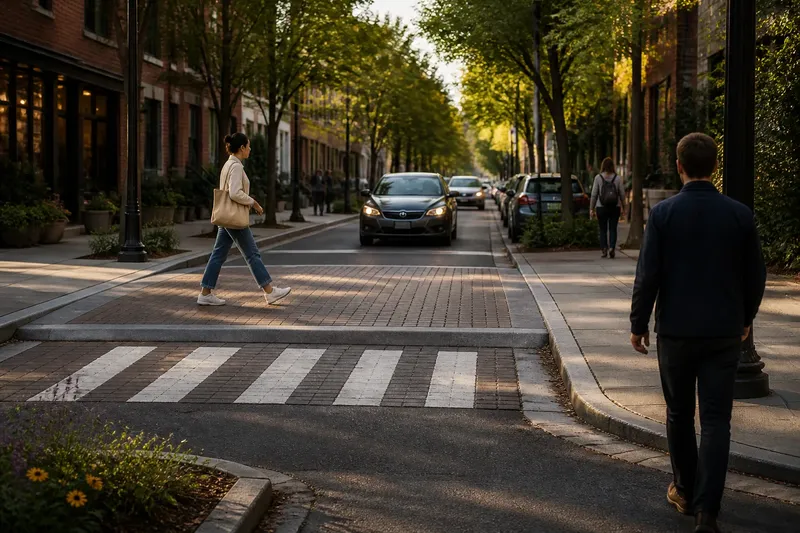
Motor vehicles changed the demands placed on street edges. Parking, signs, lighting, and traffic control brought objects associated with vehicles, but the edge did not become exclusively a place for driving. People still needed to walk, wait, meet, and reach building entrances. Objects therefore sit among activities that do not always fit neatly into separate zones.
A bike rack is a clear example. It serves a mode of transport but often sits near uses that are not about transport at all. Someone may lock a bicycle near a café, library, or apartment entrance, then continue on foot. The rack gives bicycles a predictable place instead of leaving them against trees, railings, or doorways. Its usefulness depends on location as much as shape.
Other objects can also accommodate overlapping uses. A broad ledge may offer a short rest, a low wall may guide movement while providing a place to sit, and a bollard may separate pedestrians from vehicles while protecting a corner. These objects do not serve everyone in the same way. Their value partly lies in allowing ordinary activities to share an edge without requiring dedicated hardware for each one.
How does a bike rack change the space around it?
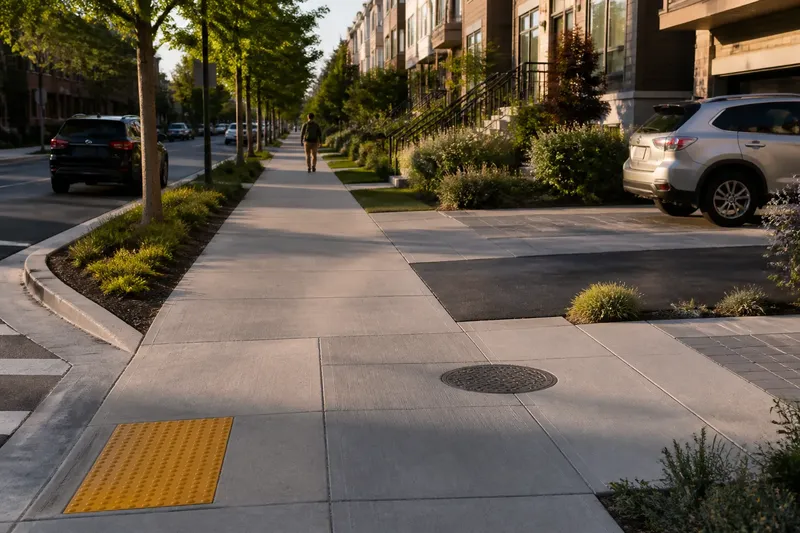
A bike rack organizes the space needed to approach, lock, and remove a bicycle. If placed in front of a door, beside a curb ramp, or where people gather, it may solve one problem by creating another. Near a destination and outside the main walking line, it can make bicycle parking orderly while leaving other sidewalk uses room to continue.
Say a small bakery has no designated bicycle parking, and visitors leave bikes beside its entrance. The owner requests a rack. The city considers two possible locations: directly beside the door or near the curb, away from the doorway and the corner where people cross. Choosing the curbside location gives bicycles a consistent place to be locked while keeping the entrance and corner clearer. The tradeoff is that cyclists may need to walk a little farther to the door; the observable decision is whether that modest detour is preferable to bikes gathering at the entrance.
Furniture is best understood as a relationship between an object, a route, and a destination. A bench can invite a pause while narrowing the path beside it. A trash can can make a place easier to keep clean while becoming an obstacle at a pinch point. Like a coat hook in a narrow hallway, an object can be useful and still be badly placed; usefulness does not make clearance appear by magic.
What should you look for at a street edge?
- Observe whether the object supports an immediate activity such as parking, sitting, lighting, guiding, or protecting; if people use it for that purpose, keep that function in mind, but if it serves another repeated use, consider whether its placement should reflect that instead.
- Check whether people walking together, using mobility devices, pushing strollers, carrying bags, or entering nearby buildings can pass; if the route remains clear, retain the location, but if movement is awkward, consider relocating the object or asking the responsible agency to review it.
- Notice whether the object is near the destination or route it serves; if users can reach it without crossing the main walking line, its location may be suitable, but if they must weave through pedestrians, consider a location closer to the destination and outside that line.
- Check how the object works when occupied, not only when empty; if a parked bicycle, seated person, or open bin leaves the route usable, the arrangement may work, but if ordinary use blocks passage, consider more room or a different placement.
- Look for doors, curb ramps, corners, and places where people naturally gather; if the object stays clear of these points, keep it in consideration, but if it obstructs access or movement, seek a location that does not compete with them.
- Inspect the object for visible damage, loose parts, or a use that conflicts with its purpose; if it remains functional, note any maintenance need, but if it is broken or unsafe to use, report it to the responsible local agency rather than treating it as usable furniture.
What can a row of objects reveal?
Several objects together can form an unofficial boundary between a walking route and the curb. A line of bollards, a bench, a trash bin, and a rack may direct people without a sign, creating cues that are read through movement rather than text.
That sequence can help or confuse. A bench facing a plaza may invite a pause, while one facing a busy curb may expose its users to passing traffic. A row of posts may protect a corner yet leave a gap that directs bicycles or scooters through the pedestrian path. Each object may have a sensible purpose, but the combined arrangement is what people encounter.
Materials and maintenance also affect how an object is understood. A bent metal rack may no longer hold bicycles as intended. A bench with a broken slat may signal that sitting is not a comfortable option, even if it remains in place. These visible clues indicate whether the street edge is being maintained as usable public space or merely furnished on paper.
For product-specific details, consult the manufacturer's instructions. Local rules may apply to changes in public rights-of-way or accessibility. Ask the responsible local agency or a qualified professional before assuming a familiar object can be installed anywhere.
What do people ask about hitching posts and bike racks?
Why were hitching posts placed at the street edge?
They gave horses a place to wait while riders made short visits to nearby businesses or destinations. Their location reflected the needs of animal-drawn travel and the way people arrived at the street.
How is a bike rack different from a hitching post?
Both provide a place to secure a mode of transport, but they answer different practical needs. A bike rack is used alongside walking, building access, and other sidewalk activity, so its placement must account for those overlapping uses.
Where should a bike rack go on a sidewalk?
It should be near the destination it serves without obstructing doors, curb ramps, corners, or the main walking route. Local requirements and site conditions matter, so a public installation should be reviewed by the responsible agency.
What can old street furniture tell us?
It can suggest which activities a street once supported, but an object alone rarely explains the whole story. Consider its location, present condition, and relationship to surrounding routes and buildings.
Why does this history matter to a street today?
The shift from hitching post to bike rack offers one way to interpret how a street edge responds to changing travel habits. Each object records a need, but its effect depends on how it joins the rest of the street. A rack can support a bicycle trip and a nearby shop visit; a seat can support rest and make a public place more available; a post can guide movement without calling attention to itself.
Street furniture at the edge of a sidewalk becomes easier to read when you ask what use it recognizes, what use it leaves out, and how it behaves when occupied. The main search phrase, street furniture at the street edge, points to that relationship: look at where an object stands, what route it touches, and who must move around it.